A Materials Revolution Transforming Batteries at the Core | Membrane Creation Co., Ltd.
JP / EN
MEMBRANE CREATION Co., Ltd. — 2026
 

For 35 Years,
No One Could Change
the Core of Batteries — Until Now.

Since the invention of lithium-ion batteries, separators have remained polyethylene-based for over 35 years.
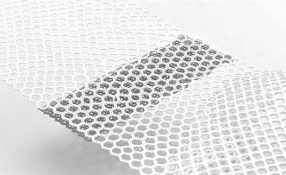
With our proprietary microporous polyimide membrane (IOP), we are the first to fill this technological void.

3x
Higher Heat Resistance
5x
Longer Lifespan at 60°C
400
No Thermal Deformation
scroll

35 Years of
Technological Stagnation

35

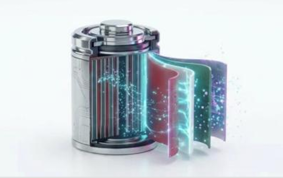
The separator — a core component of lithium-ion batteries — has remained polyethylene-based since commercialization in 1991. This stagnation continues to define the limits of the entire battery industry.

Thermal Runaway Risk
130°C Melting Point
Under abnormal heating, the cathode and anode can come into contact, causing short circuits and ignition. Degradation accelerates in high-temperature environments.
Charging Speed Barrier
Physical Limit
Ion pathways cannot be increased any further, limiting improvements in charging speed and power output.
Short Lifespan & High Cost
15Years Max
Battery replacement remains the largest cost factor for both EVs and ESS. Extending battery lifespan is an unresolved challenge across the industry.
Temperature Range Constraints
UnstablePerformance
Performance deteriorates in both high- and low-temperature environments. Limited electrolyte options also restrict available approaches to improving safety.

Why No One Could Change It

01
Loss of R&D Capacity
Due to Price Decline
Separator prices fell from approximately ¥200/m² to ¥40/m², leaving incumbent manufacturers without the resources to invest in new material development.
02
Structural
Industry Oversight
Battery manufacturers focused their development investments on cathodes, anodes, and electrolytes. For more than 35 years, separators were treated as cost-first consumables.
03
Extremely High
Technical Barriers
The potential of polyimide was known, but the technology to form high-porosity microporous membranes required for battery separators had not been established, preventing commercialization.
STEP 01 The Separator
Changes
STEP 02 Electrolyte
Options Expand
STEP 03 Cathode and Anode
Design Freedom Increases

The Company That Breaks 35 Years of Stagnation Will Lead the Next-Generation Battery Market.

Switching to Polyimide Changes Everything.
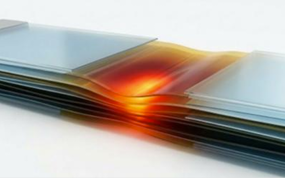
Physically Blocks Thermal Runaway
Physically Blocks
Thermal Runaway
400℃+
Existing PE/PP melts at 130°C, while polyimide maintains its shape even above 400°C.
Compact Design with Higher Capacity
Compact Design
with Higher Capacity
5–8μm
With porosity of 55–70% versus 40–50% for conventional materials, ion permeability improves by up to 1.5x.
5x Lifespan at 60°C
5x Longer Lifespan
at 60°C
3000Cycles
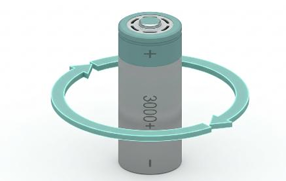
Compared with the conventional 300 cycles, IOP is projected to achieve 3,000 cycles in a 60°C high-temperature environment, significantly reducing battery replacement frequency.
Stable Across Wide Temperature Ranges
Stable Operation Across
Wide Temperature Ranges
−15 to 85
High wettability with heat-resistant electrolytes and ionic liquids enables the selection of electrolytes suited to environments ranging from hot regions to cold climates.
   
                   
Comparison AxisPEPPCeramic-Coated PPIOP (Our Company)
Heat Resistance Temperature Approx. 130°C (melting) Approx. 135°C (melting) 150–180°C 400°C+
Porosity 40–50% 40–50% 40–50% 55–70%
Film Thickness 8μm+ 8μm+ 12μm+ 5–8μm
Cycle Life 1,500–2,000 cycles 1,500–2,000 cycles Slight improvement 3,000 cycles (projected at 60°C)
Safety (Nail Penetration) Ignition risk Ignition risk Moderate Clears EUCAR Level 2
Electrolyte Options Limited Limited Limited Wide range (including flame-retardant options)
 

The Numbers Show
an Overwhelming Performance Gap

All validation data is based on our internal testing, including items still under evaluation. Performance values are based on comparisons with PE and our proprietary test data.
High-Temperature Life (60°C Environment)
Combination of IOP and Heat-Resistant Electrolyte
Existing LIBs fall below 50% capacity after approximately 300 cycles. IOP achieves dramatically longer life in a 60°C environment.
3000 Cycle Life Projected Cycle Life (Approx. 5x Conventional)
100°C Environment
Current PE Separators Cannot Discharge
With the combination of IOP and heat-resistant electrolyte, the battery maintains function even at 100°C.
100 °C Normal Operation
Low-Temperature Life (−15°C Environment)
Separator Change Only
Even at −15°C, IOP demonstrates overwhelmingly longer discharge life compared with conventional separators. Evaluation is ongoing.
−15 °C Discharge Life Maintained
Lithium Metal Anode Battery
Current PP Deteriorates Rapidly Within 15 Cycles
Demonstrated 95% capacity retention after 200 cycles. With approximately twice the energy density of current LIBs, it is ideal for drones and eVTOL.
95 % Capacity Retention (200 Cycles)

Before Solid-State Batteries,
IOP Will Transform the Market.

Mass consumer adoption of solid-state batteries is expected after 2030. IOP has both a timing advantage and a performance advantage, positioning it to capture the market with mass production beginning in 2029. The global separator market is expected to reach approximately ¥3 trillion by 2030, with a CAGR exceeding 19%.

ESS (Industrial / Grid)
◎ Strong Fit
EV (High-Load Applications)
◎ Strong Fit
Data Centers
◎ Strong Fit
Drones / eVTOL
◎ Strong Fit
Hot Regions 2W/3W
◎ Strong Fit
Electric Vessels
○ Fit
3
CAGR Over 19%
Global Separator Market in 2030

Evaluation Samples from 2027, Mass Production System Established from 2029.

2026
Establish Business Foundation
2027-28
Begin Providing Sheet and Roll Samples
2029
Establish Mass Production System and Begin Mass Production

Patents × Manufacturing Know-How × Long-Term Contracts.
Expanding the market through three layers of barriers to entry.

01
Exclusive Patents
The core patents (7 registered in Japan, with overseas applications filed) are held by Tokyo Metropolitan University. Professor Emeritus Kanamura, the inventor, serves as our director. Discussions are underway to obtain exclusive implementation rights. Six new patent categories are planned for filing within 2026.
02
Proprietary Manufacturing Know-How
Manufacturing know-how, including formulation and firing conditions, is proprietary knowledge beyond the scope of patents, making imitation by late entrants extremely difficult.
03
Lock-In Through Long-Term Supply Contracts
Battery components take several years to be adopted, and once adopted, they create long-term supply obligations. Switching costs are extremely high, creating strong barriers to replacing suppliers.

An Integrated Team
Across Technology, Industry, and Finance

Shusuke Oguro
Representative Director
Shusuke Oguro
Graduated from the Graduate School of Engineering at Yokohama National University. After joining Matsushita Electric, he spent 35 years in the lithium battery business. He served as Director of Matsushita Battery Industrial Co., Ltd. and as Head of the Lithium-Ion Battery Business Unit at Panasonic Energy Co., Ltd., where he was involved in launching the Suminoe Plant. He also served as Representative Director of Panasonic Cycle Technology Co., Ltd.
Kiyoshi Kanamura
Director / Inventor of IOP
Kiyoshi Kanamura
Inventor of the IOP Separator
Ph.D. in Engineering from Kyoto University. After serving as Professor of Applied Chemistry at the Graduate School of Engineering, Tokyo Metropolitan University, he became a NIMS Fellow in 2021. In 2023, he was appointed Integrated Team Leader of the Green Technologies of Excellence (GteX) program.
Masayuki Taniguchi
Director / CFO
Masayuki Taniguchi
Since 1991, he has worked as an independent financial planner, providing extensive consulting services. As president of an investment trust management company, he established Japan’s first real estate fund REIT. As Representative Director of Mikuraya Shoji Co., Ltd. and other companies, he developed inbound brokerage services for overseas investors. At our company, he oversees finance, fundraising, and commercialization as CFO.
Investor Relations

Let’s Change
the Future of Batteries Together.

We welcome inquiries from VCs and CVCs.

Confidential